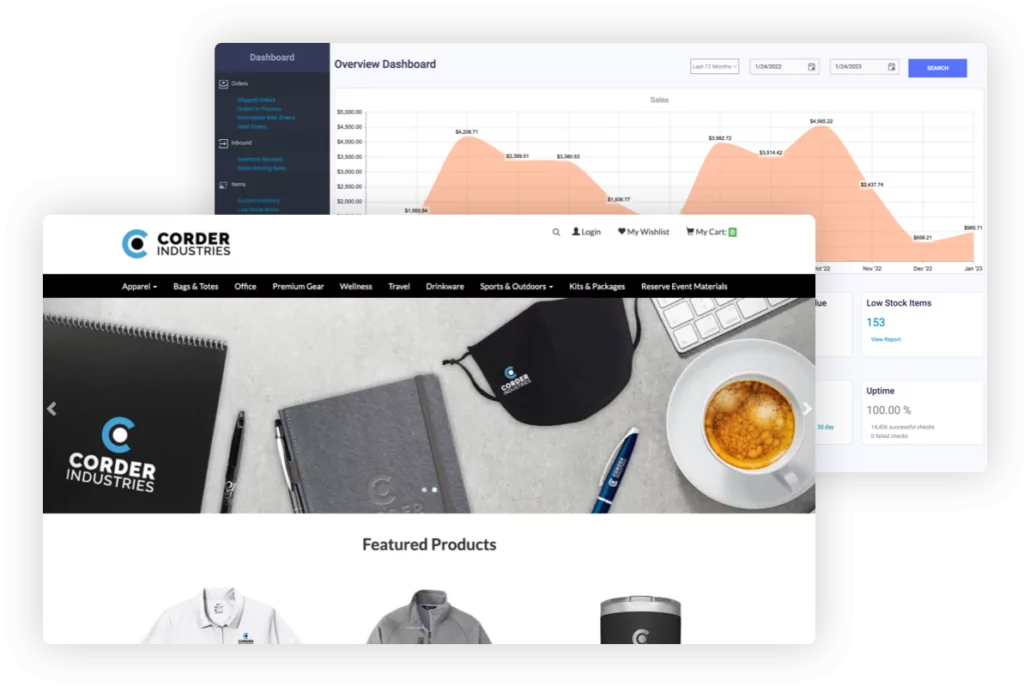


























TL;DR: A strategic company merch store assortment plan helps reduce dead stock, improve ROI, and keep your inventory aligned with real demand. This guide explains how to use data, product curation, and flexible fulfillment to build a more efficient and high-performing merch program.
- Use sales data to guide decisions in your online company merch store and avoid overstock
- Focus on core branded merchandise like branded apparel and proven promotional products
- Leverage company merch store software for real-time tracking and smarter inventory control
- Combine in-stock items with on-demand customizable products to reduce risk
- Prioritize high quality products that employees and customers actually want
A well-managed company merch store can be a powerful tool for brand building and employee engagement—but only if it’s stocked strategically. Without the right assortment planning, businesses often end up with excess inventory, outdated items, and wasted budget tied up in unsold products.
The key to success is balancing variety with demand. This guide will show you how to plan your assortment effectively so your online company merch store stays fresh, relevant, and free of dead stock.
What Causes Dead Stock in Company Merch Stores?
Dead stock happens when items in your company merch stores don’t move. This can result from over-ordering, poor product selection, or lack of visibility.
Common causes include:
- Ordering too many of the same promotional products
- Choosing items that don’t resonate with your audience
- Failing to refresh outdated branded merchandise
For online promo merch company stores, dead stock doesn’t just take up space—it reduces ROI and limits your ability to invest in better-performing items.
Start with Data-Driven Planning
The most effective merch store for company operations rely on real data—not guesswork.
Analyze Past Performance
Look at what’s actually selling in your online company merch store:
- Which promotional items are reordered frequently?
- Which sizes in branded apparel move fastest?
- Which items sit untouched?
Use this data to guide future purchasing decisions.
Focus on Core, High-Performing Products
Every successful company merch store has a core lineup of reliable products.
Build Around Essentials
Start with proven winners like:
- Branded apparel (t-shirts, polos, hoodies)
- Everyday promotional products like drinkware and bags
- Popular customizable products employees or customers actually use
These items create a strong foundation and reduce the risk of overstock.
Balance Inventory with On-Demand Production
One of the best ways to reduce dead stock in company merch stores is to limit how much you pre-purchase.
Use On-Demand for Flexibility
Instead of stocking everything, use your company merch store software to offer on-demand production for select items. This allows you to:
- Offer a broader range of branded merchandise
- Reduce upfront inventory costs
- Avoid overcommitting to slow-moving items
This hybrid model is especially effective for online promo merch company stores.
Curate a Smart Product Mix
A wide selection is important—but too many options can actually hurt performance.
Avoid Overcrowding Your Store
Instead of offering dozens of similar promotional items, focus on a curated assortment of high quality products that reflect your brand.
A clean, focused catalog in your online company merch store helps users make decisions faster—and increases overall conversion.
Plan for Seasonality and Campaigns
Timing plays a major role in inventory planning for company merch stores.
Rotate Products Strategically
Introduce seasonal or campaign-based branded merchandise, such as:
- Winter apparel
- Summer promotional products like water bottles or outdoor gear
- Event-specific customizable products
This keeps your merch store for company fresh and reduces the risk of items becoming obsolete.
Leverage Technology for Smarter Inventory Management
Modern company merch store software provides powerful tools to reduce dead stock.
Use Real-Time Reporting
Track:
- Inventory levels
- Order trends
- Product performance
This visibility allows you to make quick adjustments in your online promo merch company stores.
Automate Reordering
Set thresholds for top-performing promotional products so you never run out—while avoiding overstock.
Test Before Scaling
One of the biggest mistakes in company merch stores is committing to large quantities too early.
Start Small
Before fully launching a new product:
- Offer limited quantities
- Test demand in your online company merch store
- Gather feedback from users
If the item performs well, you can scale with confidence.
Prioritize Quality Over Quantity
Low-quality items often become dead stock because people simply don’t want them.
Invest in High Quality Products
Your branded apparel and promotional items should reflect your brand standards. When products feel premium, they’re more likely to be used—and reordered.
A focus on high quality products ensures your company merch store builds brand value instead of collecting dust.
Align Your Store with User Needs
At the end of the day, your merch store for company exists for a specific audience—employees, customers, or partners.
Understand Your Audience
Ask:
- What items do they actually use?
- What styles of branded apparel do they prefer?
- Which customizable products are most appealing?
When your assortment aligns with real needs, dead stock naturally decreases.
Turning Assortment Planning into a Competitive Advantage
Reducing dead stock isn’t just about cutting waste—it’s about running a smarter, more efficient online company merch store.
By combining data-driven decisions, a curated product mix, and flexible fulfillment through company merch store software, you can create a store that performs consistently. The best online promo merch company stores aren’t overloaded with options—they’re carefully planned to deliver value.
When your company merch store is optimized, every product has a purpose. That means less waste, better engagement, and a stronger return on your investment in branded merchandise and promotional products.